


Why Does Installation Matter a Lot in Booster Pumps?
Most people turn to a pressure booster pump to solve the annoying problem of low water pressure. And once this pump has been installed, most people also (perhaps justifiably so) believe that all they should do is open the tap / shower and water will flow with more-than-satisfying power. Yes, turning on a tap must deliver the flow but realistically speaking, the way a booster pump has been installed impacts:
-
Performance
-
Efficiency
-
Lifespan
-
Problem-free operation
Understanding installation to some extent, helps homeowners, technicians, and even prospective customers who want to invest in a high-quality booster pump, such as the Taro Premium Booster. It is good to start with reading a guide about the booster, and the manual that comes with the product, but here are a few important points that you can keep in mind with it comes to installation of a booster pump.
Not just placement, performance too
It is correct that a booster pump is meant to deliver consistent pressure across several outlets. But it will work effectively only when it is placed in such a way that the pipelines are correctly sized & correctly aligned as well.
Incorrect pipe sizes, misalignments in suction & delivery lines, and not using recommended pipe sizes can lead to issues like:
-
Pressure drops
-
Frequent pump cycling
-
Inefficient water flow
-
Vibration
-
Entry of air and so on
Base stability
The mounting platform / foundation defines stability for the booster. It is worth it to check that the foundation is level and has proper fastenings. Any weakness or instability in the base can lead to problems such as noise, vibrations, and mechanical stress. All or few of these problems can even lead eventually to failure in components and the booster pump itself.

Unstable mounting often shows up in problems such as repeated maintenance, unexplained noises, and operational issues. On the other hand, a well-installed pump on a stable base will operate smoothly & silently.
Suction conditions
What is the type of suction that the booster needs to handle? In this context, there are only two types of suction:
-
Positive suction where the water source is above the pump and gravity does the work of feeding water to the booster
-
Negative suction where the pump is above the source and must use a vacuum to pull the water up
Following the recommended suction lift will help in fail-proof, efficient operations. This is especially important for negative suction installations. Priming is super-important in a negative suction situation, and the pump may need a foot valve too.
Electrical infrastructure
Using correctly rated cables, investing in proper earthing, having dedicated power sockets for the pump, and following safety protocols while installing the booster go a long way in ensuring correct methods and safe operations. Short circuits, fire hazards, and electrical shocks must be avoided, and this is possible only with proper installation.
Pressure settings
There is no one-size-fits-all setting when it comes to a booster pump. A modern booster pump should be installed with the right pressure setting which aligns the pump with the actual usage. Both maximum pressure, and differential pressure play a vital role in ensuring smooth operation. Misalignments here can lead to the pump switching on and off unnecessarily. It is pertinent to mention here that the Taro Premium Booster comes in two variants–mechanical & electronic. Both variants lend themselves to range & pressure settings, but the electronic variant has an easy-to-use LED-based system for the same.
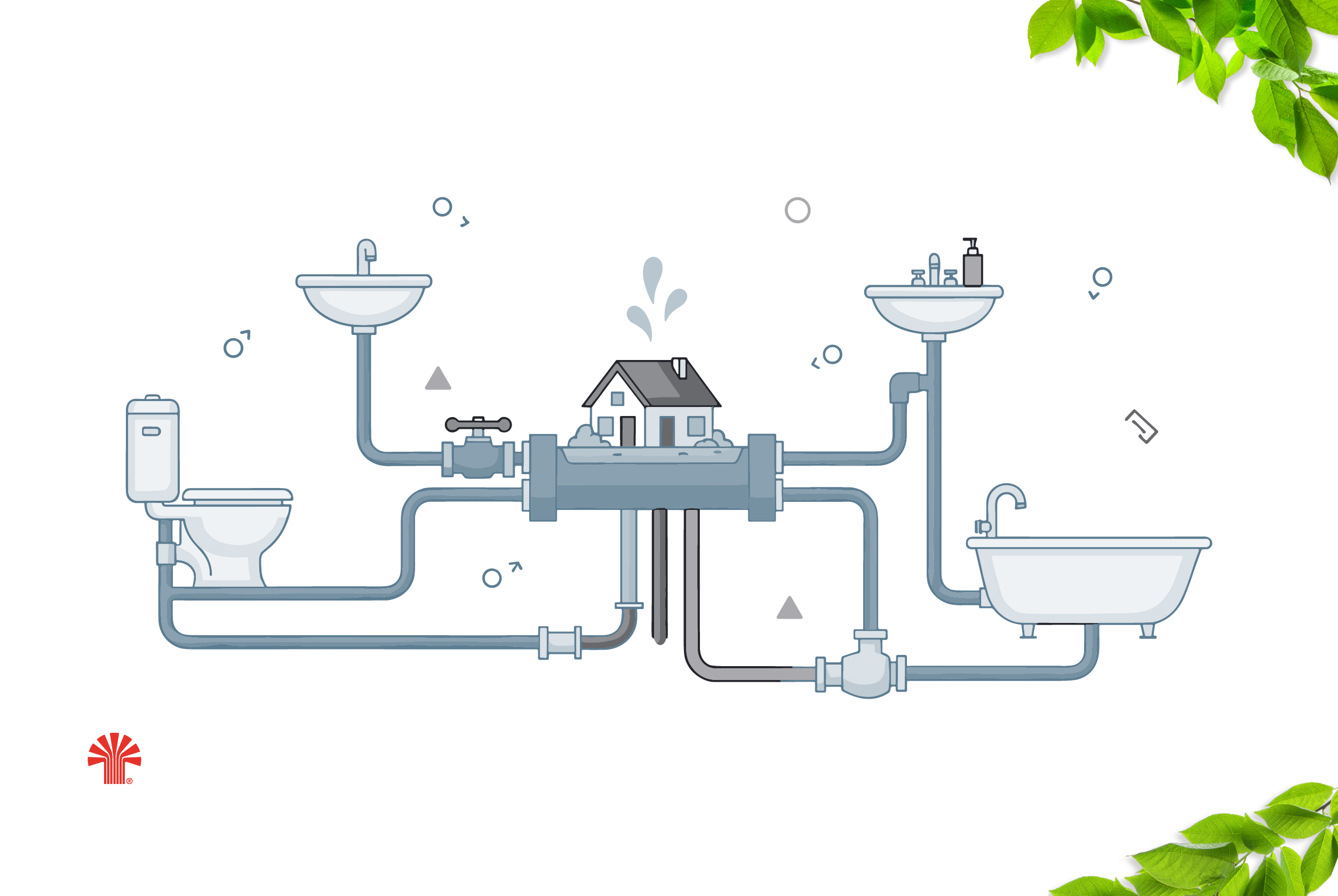
Plumbing infrastructure
A good booster pump is only as strong as the plumbing system. Leaks, weak joints, pipes material, age of the plumbing system, and the number of bends in the pipes are important factors that impact the booster’s performance. Something as simple as using as few as possible plumbing joints on the suction line can prevent many issues.
Paying attention to this, especially when a booster is being installed in an older building is useful.
Modern booster pumps come with a host of built-in protection such as dry run prevention, overload protection, compatibility with a wide voltage range, corrosion protection, motor cooling, and strainers that prevent the entry of foreign particles. All these features and more protect your investment in a booster. And when you start with the right installation, you only strengthen and prolong your ‘investment’. Finally, here is a lucid illustration of good practices while installing a booster pump.