

Why Pump Durability Matters: Impact on Long-Term Savings
When buying a water pump, most people focus first on one thing: the price tag.
It's understandable. Whether you're a farmer investing in irrigation equipment, a homeowner installing a domestic water system, or a business managing water operations, the initial cost is the most visible expense.
But here's the question many buyers don't ask:
What will this pump cost me over the next 5, 10, or even 15 years?
The answer often reveals a surprising truth: the cheapest pump to buy is rarely the cheapest pump to own.
Pump durability impacts & determines long-term operating costs, maintenance expenses, energy consumption, reliability, and even performance. Interestingly, industry lifecycle studies consistently show that the purchase price accounts for only a small fraction of the total cost of owning a pump. Energy, maintenance, and downtime account for most expenses over a pump's lifetime.
Let's explore why durability matters and how investing in a high-quality pump can deliver significant savings year after year.
The Difference Between Short-Term Cost and Long-Term Investment
Imagine two pumps:
Pump A costs less upfront.
Pump B costs slightly more but is built with superior materials, better engineering, and components designed for longer service life.
At first glance, Pump A appears to be the better deal.
However, over time, things begin to change.
Pump A may require more frequent repairs, replacement parts, service visits, and even need complete replacement sooner than expected. Pump B, meanwhile, continues to operate efficiently with minimal intervention.
The above illustration highlights the difference between cost and value.
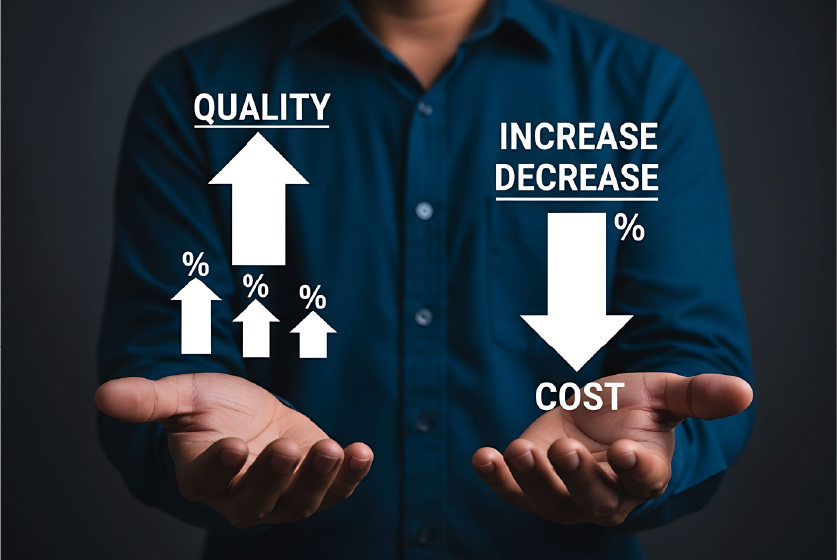
A durable pump is not merely an expense—it is an investment that pays back through dependable performance and reduced ownership costs.
Studies of pump lifecycle costs suggest that initial purchase costs can account for only 5-15% of total ownership costs. At the same time, energy and maintenance often account for the largest share of a pump's life.
How Does Durability Reduce Maintenance Costs?
Maintenance is one of the most overlooked expenses in pump ownership.
Every breakdown brings costs that extend beyond replacement parts. Think of how much you may have to pay for:
-
Technician visits
-
Labour charges
-
Production interruptions
-
Irrigation delays
-
Emergency repairs
For farmers, a pump failure during a critical irrigation period can affect crop health and yield. For homeowners, it can disrupt the daily water supply.
Durable pumps are engineered to meet challenges such as demanding operating conditions. Components such as high-quality bearings and corrosion-resistant components must work in tandem with robust motor construction and precision manufacturing—the result is that all aspects lengthen service intervals and reduce the likelihood of unexpected failures.
Industry analyses estimate maintenance and repair costs can account for 10–25% of a pump's total lifecycle cost, making reliability a major factor in long-term savings.
Simply put:
The fewer times you need to repair a pump, the more money stays in your pocket.
The Hidden Savings of Consistent Energy Efficiency

Electricity is often the largest operating expense associated with a water pump.
A common misconception is that all pumps consume the same amount of power. In reality, efficiency can vary significantly depending on pump design, operating condition, and wear over time.
Durable pumps can maintain their performance characteristics longer because critical components typically experience less wear and degradation. Therefore, they continue operating at or near their intended efficiency levels for years.
Energy experts estimate that energy consumption can account for 40–80% or more of a pump's lifetime cost, depending on operating conditions. Even small efficiency improvements can lead to substantial savings over the life of the equipment.
Consider this as well: a pump running for several hours every day for irrigation adds up to thousands of operating hours annually. Therefore, even small reductions in electricity consumption can result in significant savings year after year.
That's why a cost-effective irrigation pump is not necessarily the one with the lowest purchase price—it is the one that delivers efficient performance consistently over its lifetime.
Looking at the Real Cost Over the Years
Let's look at it practically: say a low-cost pump lasts 5 years before needing replacement. In comparison, a durable pump continues performing reliably for ten years or more with minimal maintenance.
Now factor in:
-
Replacement costs
-
Service expenses
-
Downtime
-
Electricity consumption
-
Spare parts
Suddenly, the more durable option often becomes the more economical choice.
Many high-quality centrifugal and water pumps can operate for 10–15 years or longer.
The simple caveat here? They do so when maintained properly and used within their design parameters & guidelines.
This is why experienced buyers increasingly evaluate the long-term value of water pumps rather than focusing solely on upfront cost.
Why Does Durability Matter for Agriculture?
Agriculture places unique demands on pumping systems.
Pumps may operate for extended hours during growing seasons, handle fluctuating water levels, and work in challenging environmental conditions.
A durable water pump for agriculture offers several powerful advantages:
-
Reliable irrigation during all crop stages
-
Reduced risk of unexpected breakdowns (and the stress associated with this)
-
Lower maintenance requirements
-
Higher operational efficiency
-
Greater return on investment
For farmers, reliability is not just a convenience—it directly impacts productivity.
Every uninterrupted irrigation cycle contributes to healthier crops and more predictable outcomes.
The Smart Choice for Long-Term Savings
When evaluating a long-lasting water pump in India, it is important to consider more than the purchase price.

Ask questions such as:
-
How long is the pump expected to last?
-
What materials are used in its construction?
-
How energy-efficient is the design?
-
What maintenance requirements can I expect?
-
What is the total cost of ownership over 10 years?
The answers will often point toward durability as one of the most valuable features a pump can offer.
At Taro Pumps, durability is not treated as an afterthought. It is built into every stage of design and manufacturing, helping customers achieve reliable water movement, lower operating costs, and greater peace of mind for years to come.
Because in the world of pumping solutions, true value is measured not on the day you buy the pump—but over every day it continues to perform reliably thereafter.