


How to Choose the Right Water Pump for Your Farm or Home
Choosing the best water pump for agriculture fields or your home is not just about moving water from the source to the destination. When you buy the right pump, you also enjoy advantages such as:
-
Improved irrigation efficiency
-
Reduced power bills
-
Steady water supply
-
Longer lifespan of pump & plumbing system
Therefore, it is useful to look at an effective agricultural pump selection guide or a domestic pump checklist that will help farmers, and homeowners alike.
Why is Choosing the Right Pump Important?
Have you ever been troubled / disappointed because of issues such as the following?
-
Weak water flow
-
Uneven irrigation in fields
-
Motor overheating
-
High electricity bills
-
Pump damage because of dry run
In quite a few of these cases, it is not just the quality of pump alone but also the wrong type of pump that is the root cause.
The right pump for the right application results in benefits such as:
-
Reliable water flow
-
Energy savings
-
Lower maintenance costs
-
Reduced downtime
-
Better irrigation coverage
-
Longer system lifespan
This is why a water pump buying guide should begin with understanding your exact requirements.
Understanding Different Types of Water Pumps
Few of the most used pumps for farms and homes are:
-
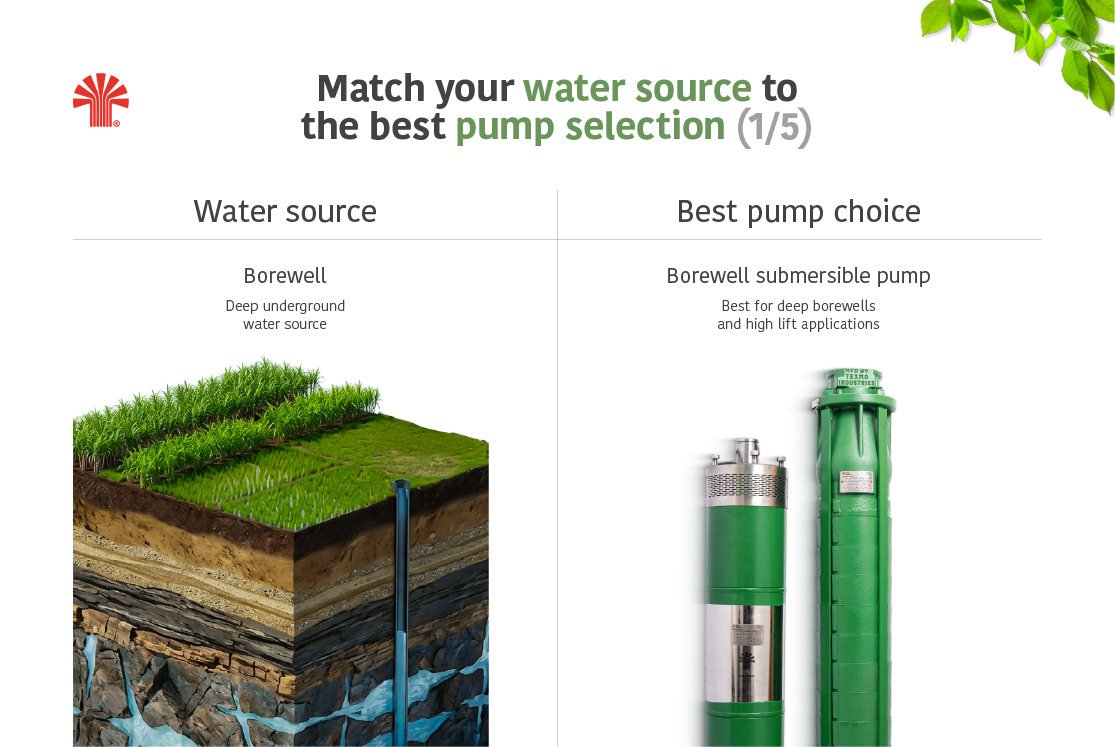
Borewell Submersible Pumps (BWS)
-
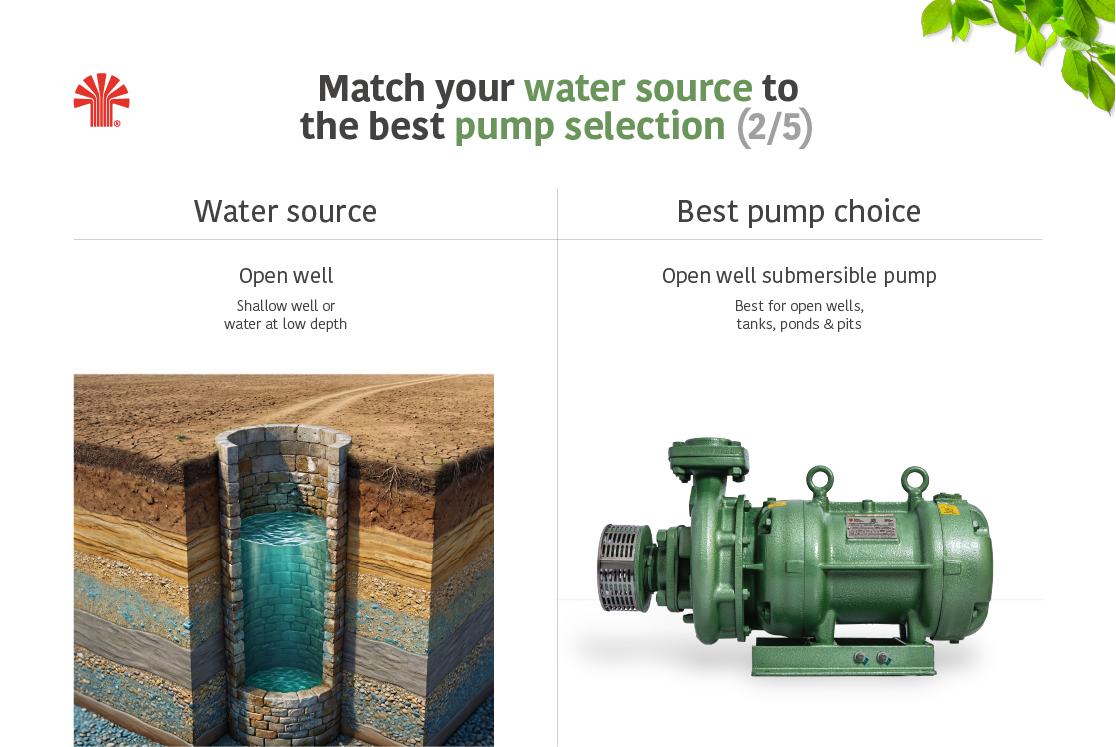
Open well Submersible Pumps (OWS)
-
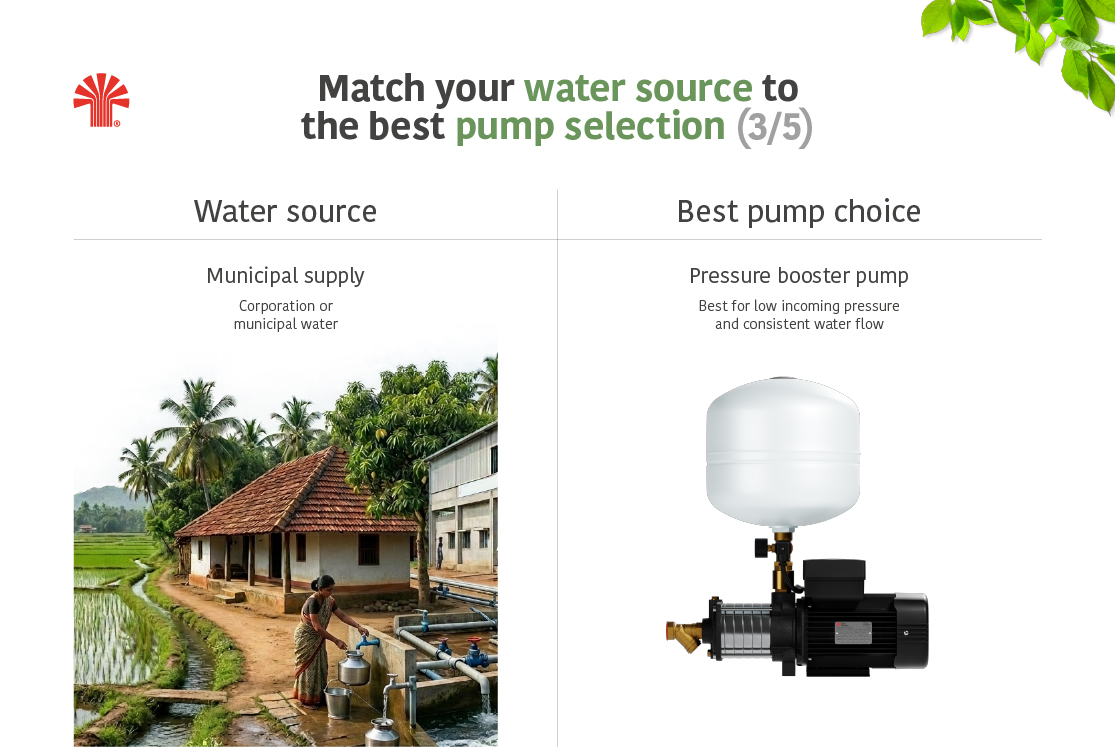
Pressure Booster Pumps
-
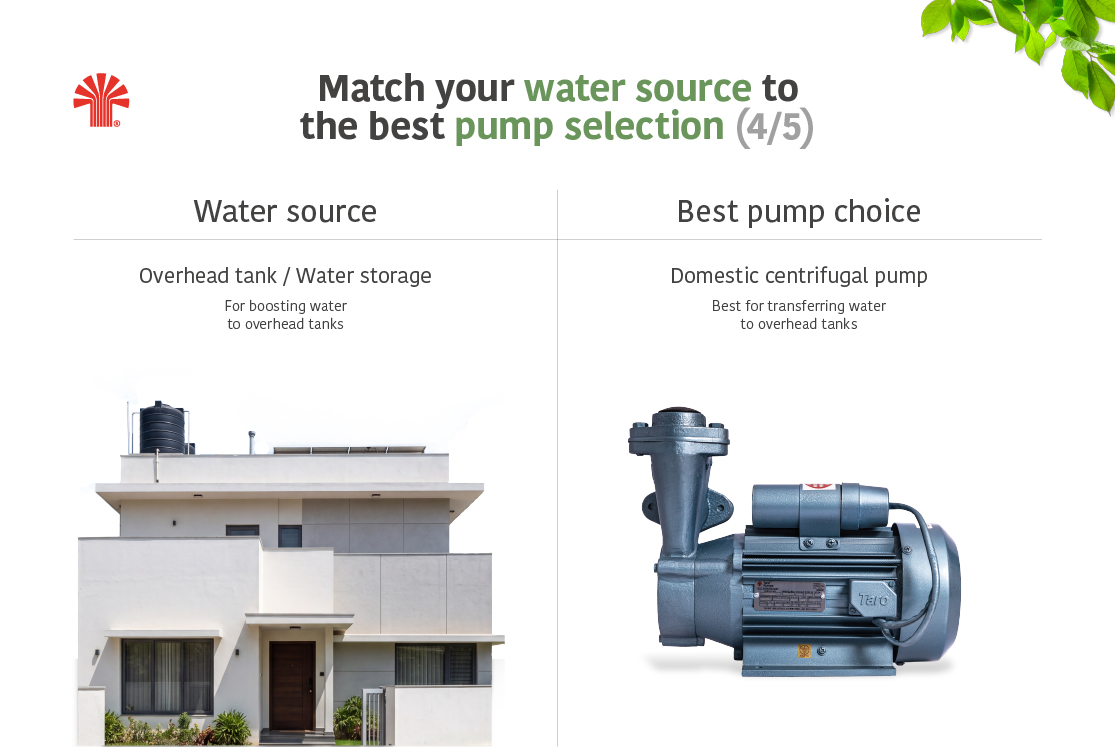
Centrifugal Pumps
BWS are made for deep borewells, where the groundwater is at a great depth. These pumps operate underwater and are mostly used for agricultural irrigation, rural water supply, and deep groundwater extraction. Farmers, often, rely on borewells for irrigation.
OWS are used in shallow water sources, including wells, ponds, and tanks. They are known for their quiet operation, efficiency, and suitability for fluctuating water levels.
Pressure booster pumps are a practical & easy solution to the problem of low water pressure in bathrooms, kitchens, domestic appliances, and commercial plumbing system. They are gaining traction in urban households and multi-storey homes.
Centrifugal pumps are quite versatile and find use in small agricultural applications, garden irrigation, and water transfer. They are known for their affordability.
Now, let’s look at the few important factors to consider before buying any pump.
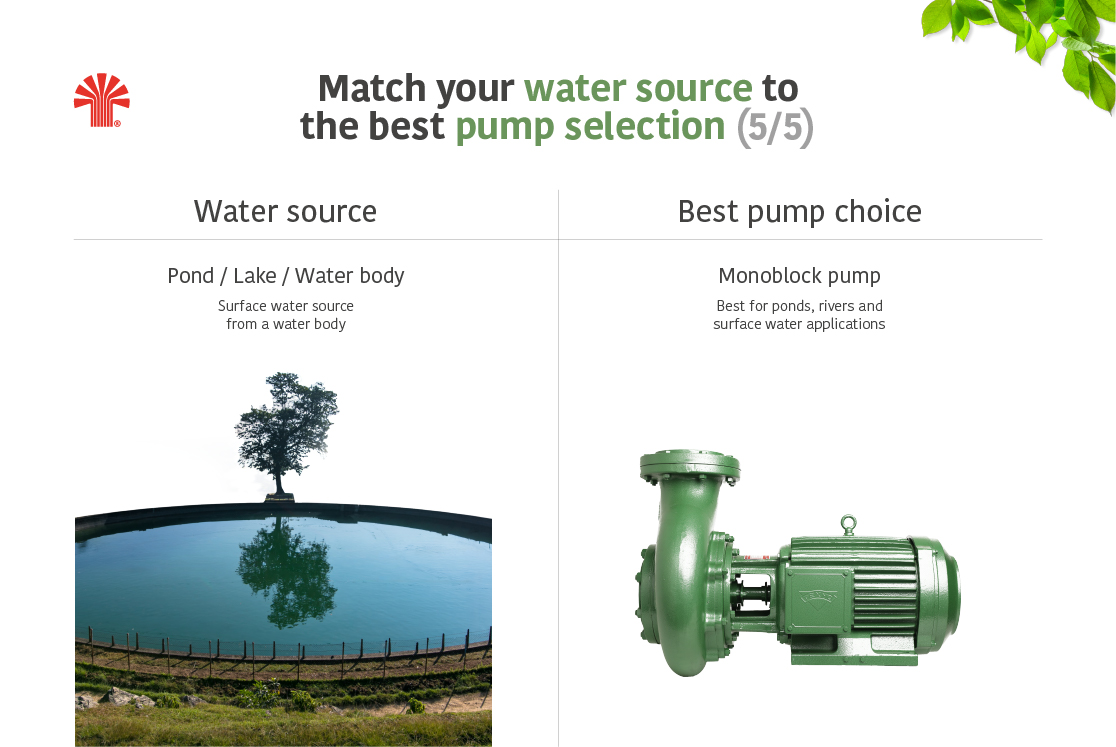
What is Your Water Source?
Here is a basic pictorial representation of the ideal match.
How Much Water Do You Need?
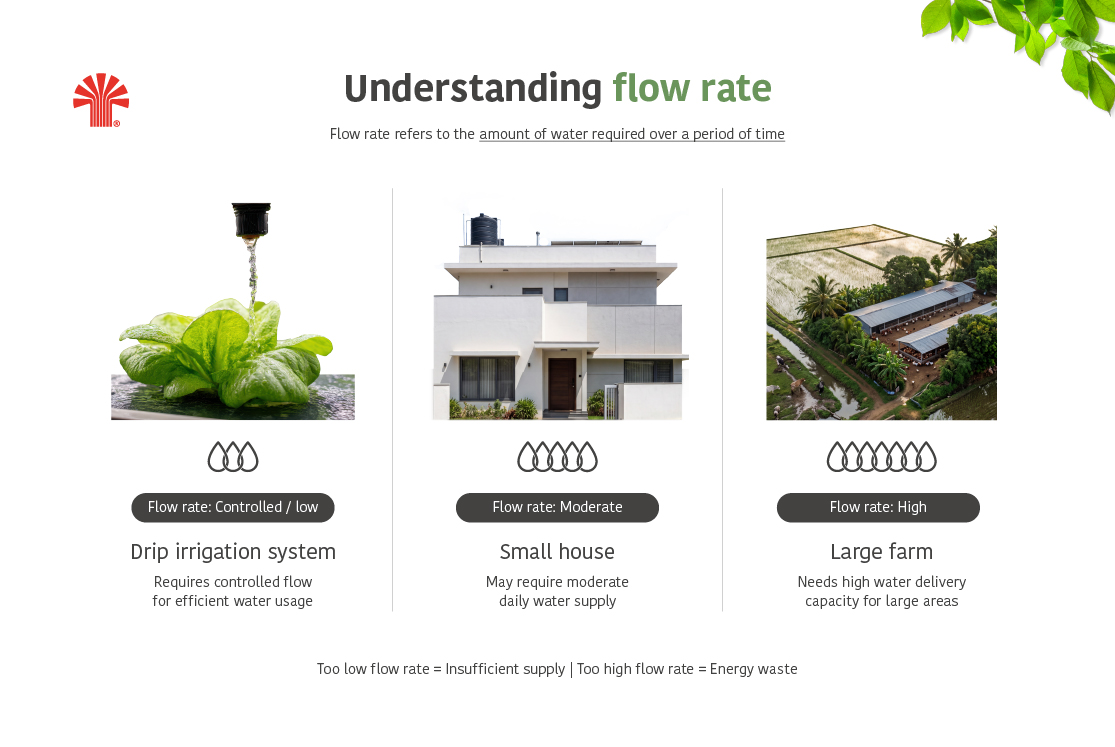
Flow rate or the amount of water required for a period of time will also have an impact on pump choice. Here is a simple representation of this:
What is the Total Head and Lift?
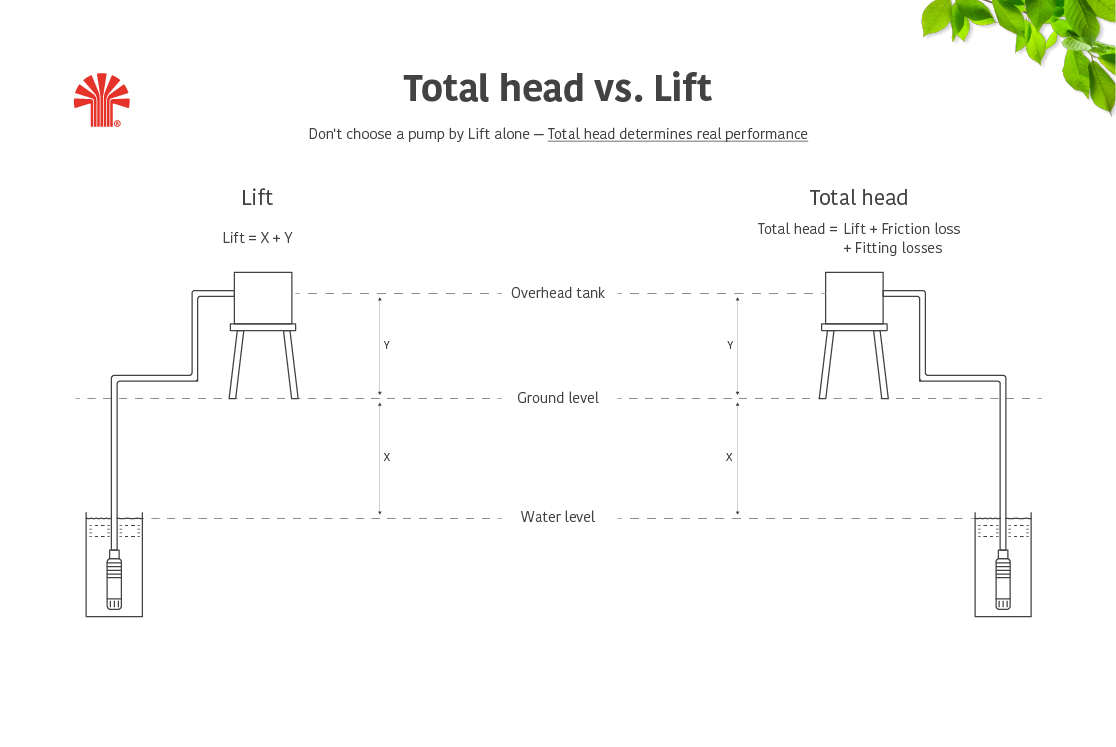
Head is the vertical distance that the water must be moved. Pump friction, and pressure requirements play a role in determining head. Most often, pump buyers overlook or neglect this crucial aspect. A farmhouse or home with an overhead tank requires a higher head. A deep borewell needs a pump that can take on significant lift
What is the Power Supply?
Few important things to check about your location and the type / quality of power supply:
-
Single-phase power
-
Three-phase power
-
Frequent voltage fluctuations
-
Power shutdowns on maintenance days – will help schedule pump operations with an app
For instance, rural areas often experience unstable power supply. Here, pumps with voltage protection, efficient motor design, and a 2-year warranty are especially valuable. Government estimates state that efficient irrigation sprinkler systems, for instance, can reduce water consumption by 30–40%
Where Pump Buyers Often Go Wrong
Here’s a simple list of mistakes that a smart pump-buyer like you would not make:
-
Buying based only on price
-
Ignoring water quality on site
-
Choosing a higher HP pump (higher does not equal better performance)
-
Ignoring service support
-
Buying a locally made pump which may not always have technician support
Important Note: an undersized pump may lead to low / insufficient water supply. An oversized pump will waste electricity. It is the perfect-sized pump that is right. And buying the right pumps starts with asking the right questions.
If you want to start with a simple list of questions, use the following:
-
What is the water source?
-
What is the required head, flow rate, and lift?
-
What is the power supply situation?
-
Is the pump energy-efficient?
-
Is the pump a good, long-standing brand?
-
What is the service network like? Is there a promise of a quick turnaround?
-
Are spare parts available easily? For instance, Taro Pumps promises spares availability for fifteen years
-
What are other people saying about the pump? (Google reviews is a good place to start)
In Conclusion
Choosing the right pump is akin to making a financial investment, so wisdom is important here. The best water pump for farmers or homeowners is not necessarily the most powerful one. A pump should match your usage, power conditions, and water source perfectly. Whether it is a pump for agricultural fields or for domestic water management, understanding the basics of pump selection will result in the best choice.